Threat reportMalwareTL-2026-6681
Vmcloudoor Linux Backdoor Targeting Chinese Cloud VMs (Alibaba, Tencent, Huawei) Masquerading as Trusted Cloud Agents
ExaTrack disclosed Vmcloudoor, a Linux implant that infects VMs on Chinese cloud platforms (mainly Alibaba Cloud, also Tencent and Huawei) and masquerades as the vendor's own agents. It uses Alibaba OSS buckets, with a Gitee-hosted config fallback, as a dead-drop C2 and supports command execution, file push, file exfiltration and machine inventory with EDR/AV awareness.
Key facts
| Identifiers | TL-2026-6681 |
|---|---|
| Also known as | Vmcloudoor, oss_v2, hpgoc2 |
| Severity | MEDIUM |
| First disclosed | |
| Affected products | Alibaba Cloud Linux ECS virtual machines (impersonated aliyun-assist / Aegis agents); Tencent Cloud Linux CVM virtual machines (impersonated YunJing / tat_agent); Huawei Cloud Linux ECS virtual machines (impersonated uniagent / telescope) |
| Malware | RemCom, Vmcloudoor |
| MITRE ATT&CK techniques | T1008 Fallback Channels, T1033 System Owner/User Discovery, T1036 Masquerading, T1036.005 Masquerading: Match Legitimate Resource Name or Location, T1057 Process Discovery, T1059 Command and Scripting Interpreter, T1071.001 Application Layer Protocol: Web Protocols, T1082 System Information Discovery, T1102.001 Web Service: Dead Drop Resolver, T1124 System Time Discovery, T1518.001 Software Discovery: Security Software Discovery, T1564.001 Hide Artifacts: Hidden Files and Directories and 1 more in the attack flow |
| Motivation | UNKNOWN |
| Target sectors | cloud-infrastructure, technology |
| Target regions | china |
| Detection rules | 9 (1 shown free) |
| Sources | 7 cited sources |
Detection coverage
As of 2026-11-23, Threadlinqs Intelligence publishes 9 detection rule(s) for TL-2026-6681 across Splunk SPL, Microsoft KQL and Sigma, covering 19 indicator(s) of compromise. The whole corpus is readable without an account. Every threat comes with one complete detection in Splunk SPL, Microsoft KQL and Sigma, free for everyone; a free account adds daily TL Creds to unlock the rest. Paid plans add a larger daily allowance, correlation and the MCP server. Threadlinqs MCP server · View plans.
Free detection: Vmcloudoor Hidden Working Directory, Lock, Cache and Staging Artifacts (TL-2026-6681)
Detects file activity on the Vmcloudoor oss_v2 artifacts: the /dev/shm/.ov2/ default workdir, the .helper.lock single-instance lock, the .epcache cached C2 endpoint, the ov2-out POSIX shared-memory object, the .ov2_%08x_XXXXXX temp files used for file push and exfiltration staging, and the look-alike vendor directories aliyun-sys-assist, YunJingSysAssist and uniagent-sys.
- Languages: Splunk SPL, Microsoft KQL, Sigma
- ATT&CK: T1564.001, T1036.005, T1105
- Data sources: linux_auditd (index=linux, sourcetype=linux:audit, type=PATH), defender_for_endpoint_linux (DeviceFileEvents), sysmon_for_linux
- Severity: high
- Confidence: high
Splunk SPL
index=linux sourcetype="linux:audit" type=PATH earliest=-24h ```Vmcloudoor oss_v2 artifact names from ExaTrack research``` (name="/dev/shm/.ov2*" OR name="/dev/shm/ov2-out" OR name="*/.helper.lock" OR name="*/.epcache" OR name="*/.ov2_*" OR name="/usr/local/share/aliyun-sys-assist/*" OR name="/usr/local/qcloud/YunJingSysAssist/*" OR name="/usr/local/huawei/uniagent-sys/*") | eval artifact=case(like(name,"%/.helper.lock"),"single_instance_lock", like(name,"%/.epcache"),"c2_endpoint_cache", like(name,"%/.ov2_%"),"push_exfil_temp_file", name=="/dev/shm/ov2-out","shm_command_output", like(name,"/dev/shm/.ov2%"),"default_workdir", true(),"vendor_lookalike_workdir") | stats count min(_time) as first_seen max(_time) as last_seen values(nametype) as nametype by host artifact name | eval first_seen=strftime(first_seen,"%F %T"), last_seen=strftime(last_seen,"%F %T") | table host artifact name nametype count first_seen last_seenMicrosoft KQL
DeviceFileEvents
| where Timestamp > ago(24h)
| where FileName in~ ('.helper.lock', '.epcache')
    or FileName matches regex @'^\.ov2_[0-9a-f]{8}_[A-Za-z0-9]{6}$'
    or FolderPath =~ '/dev/shm/ov2-out'
    or FolderPath startswith '/dev/shm/.ov2'
    or FolderPath has_any ('aliyun-sys-assist', 'YunJingSysAssist', 'uniagent-sys')
| project Timestamp, DeviceName, ActionType, FolderPath, FileName, SHA256, InitiatingProcessFileName, InitiatingProcessCommandLine, InitiatingProcessAccountName
| order by Timestamp desc
Sigma
title: Vmcloudoor Hidden Workdir Lock Cache and Staging Files
id: 0d8e4f17-5a62-4b9c-8e30-72f1a9c6d512
status: experimental
description: Detects creation or access of files used by the Vmcloudoor oss_v2 Linux implant, including the /dev/shm/.ov2 workdir, .helper.lock, .epcache, the ov2-out shared-memory object and .ov2_ temporary staging files.
references:
    - https://exatrack.com/publications/vmcloudoor.html
author: Threadlinqs Team
date: 2026-11-23
tags:
    - attack.defense-evasion
    - attack.t1564.001
    - attack.t1036.005
    - attack.command-and-control
    - attack.t1105
logsource:
    category: file_event
    product: linux
detection:
    selection_artifact:
        TargetFilename|endswith:
            - '/.helper.lock'
            - '/.epcache'
            - '/dev/shm/ov2-out'
    selection_tmp:
        TargetFilename|re: '/\.ov2_[0-9a-f]{8}_[A-Za-z0-9]{6}$'
    selection_dir:
        TargetFilename|startswith: '/dev/shm/.ov2/'
    condition: 1 of selection_*
falsepositives:
    - Unrelated software using a file called .helper.lock in its own directory
level: high
Known false positives:
- Other applications that legitimately create a .helper.lock file in their own application directory
- Software packaging that stages temporary files with an .ov2_ prefix
Tuning notes: Add auditd watch rules (-w /dev/shm -p wa, plus -w on the three look-alike vendor directories) so PATH records are generated. The .helper.lock and .epcache names are low-noise; if an in-house product collides, scope the exclusion to its exact full path rather than the filename. The aliyun-sys-assist, YunJingSysAssist and uniagent-sys directories are not genuine vendor install paths per the research, so no allowlist should normally be needed.
- Vmcloudoor Known Hash Execution and Shell Spawned by Masquerade Process (TL-2026-6681) · unlock with TL Creds
- Vmcloudoor-Style Security Product Enumeration Command Line (TL-2026-6681) · unlock with TL Creds
- Vmcloudoor Masquerade Process Network Beaconing to OSS Dead-Drop (TL-2026-6681) · unlock with TL Creds
- Vmcloudoor Execution From /dev/shm or Look-Alike Cloud Agent Directories (TL-2026-6681) · unlock with TL Creds
- Vmcloudoor System Clock Reset via hwclock After Aliyun Date Header Check (TL-2026-6681) · unlock with TL Creds
- Vmcloudoor C2 Proxy Traffic: AliyunSysAssist/1.0 User-Agent, OSS Buckets and Gitee Config (TL-2026-6681) · unlock with TL Creds
- Vmcloudoor Cloud-Agent / kworker Masquerade Process With On-Disk Executable (TL-2026-6681) · unlock with TL Creds
- Vmcloudoor Alibaba OSS Dead-Drop and Gitee Fallback DNS/TLS Lookups (TL-2026-6681) · unlock with TL Creds
Indicators of compromise
As of 2026-11-23, Threadlinqs Intelligence tracks 19 indicators of compromise for TL-2026-6681.
Sample indicators (3 of 19)
- Domain:
top-sec[.]oss-cn-beijing[.]aliyuncs[.]com - URL:
hxxps://gitee[.]com/watch_dog_auth/plus - File hash:
0e1bd634d5fc8f4df1c91f0072a4556eb11f41ecc95b05f5a2ffb0e0b914613d
Defanged, TLP:CLEAR. Full set of 19 indicators: unlock with TL Creds.
Technical analysis
Vmcloudoor is a Linux x64 ELF implant (C++ namespace oss_v2) documented by ExaTrack on 2026-11-19 and re-reported by GBHackers on 2026-11-23. Only the 'helper' module was recovered (sha256 0e1bd634...4613d). A second module, 'Core', responsible for executing C2 commands, is compiled into the same binary and listens on a local socket named hpgoc2.oss.v2.core without ever calling accept(). A later build (sha256 5f733bbe...f620) shares roughly 88% of the code and mainly changes C2 polling cycles and timeouts. The initial access vector and any persistence mechanism are not described in the sources.
At startup the implant looks for cloud-vendor agent directories and processes (Alibaba: /usr/local/aegis, /usr/local/share/aliyun-assist, AliYunDun, aliyun-service; Tencent: /usr/local/qcloud, /usr/local/tat_agent, tat_agent, barad_agent; Huawei: /usr/local/huawei, /usr/local/uniagent, telescope, hostguard). It then selects a concealment profile: AliyunSysAssist in /usr/local/share/aliyun-sys-assist/, YunJingSysAssist in /usr/local/qcloud/YunJingSysAssist/, UniAgentSys in /usr/local/huawei/uniagent-sys/, or by default kworker/0:2H in /dev/shm/.ov2/. It renames its process to match, creates a single-instance lock <workdir>/.helper.lock, and reads configuration from <workdir>/.cfg, /usr/local/share/aliyun-sys-assist/.cfg or the OSS_V2_URL_KEY / OSS_V2_BUCKET / OSS_V2_ENDPOINT / OSS_V2_GITEE_URL environment variables. url_key is mandatory; the program exits without it. All HTTP requests use the User-Agent AliyunSysAssist/1.0 and TLS certificates are never verified.
C2 is a dead-drop on Alibaba Object Storage Service. The agent_id is the MD5 of the machine-id and a selected MAC address. Every poll requests the object key t/<agent_id[0:8]>/<ts>/<md5(url_key|agent_id|ts)[0:16]> with ts = hex(time/300), for the current, previous and next 5-minute windows (about a 15-minute window), at https://top-sec.oss-cn-beijing.aliyuncs.com/<key>?h=<agent_id>. By default the object does not exist (404); the assessed operator workflow is to watch bucket logs for new agent_ids and upload a time-limited, host-specific task. If the bucket is closed (NoSuchBucket) the implant fetches an updated bucket/endpoint from https://gitee.com/watch_dog_auth/plus/raw/master/config (bucket=top-sec, endpoint=oss-cn-beijing.aliyuncs.com). A Gitee commit on 2026-10-14 migrated the endpoint to assist-logs on oss-accelerate.aliyuncs.com. If the HTTP Date header from https://www.aliyun.com differs from the local clock by more than 60 seconds, the implant sets the system clock and runs hwclock -w --utc / hwclock --systohc --utc.
Task types: 1 = command execution (forwarded to Core; blocklist for tools such as ssh, python, nmap, netcat, tcpdump, shells and destructive/recursive patterns, 30-second kill, output via POSIX shared memory object ov2-out with pipe/temp-file fallback); 2 = file push (absolute path, under 100 MB, downloaded to a temp file named .ov2_%08x_XXXXXX then renamed); 3 = file exfiltration by HTTP PUT to a supplied file_url; 8 = idle (one request per 5 minutes); 9 = machine inventory (hostname, username, OS/kernel, arch, CPU, memory, internal IP, security_env, sec_hit, idle_sec). Results are PUT to signed result_url links. The inventory classifies the host as EDR (level 2), AV (level 1) or clean by checking paths, process names and command lines for Elkeid, CrowdStrike, SentinelOne, Carbon Black, Cylance, Tanium, Sophos, Sangfor, Qihoo 360, Alibaba AliHips and Tencent YunJing; suggested idle intervals are 300/120/10 seconds but are advisory and not enforced.
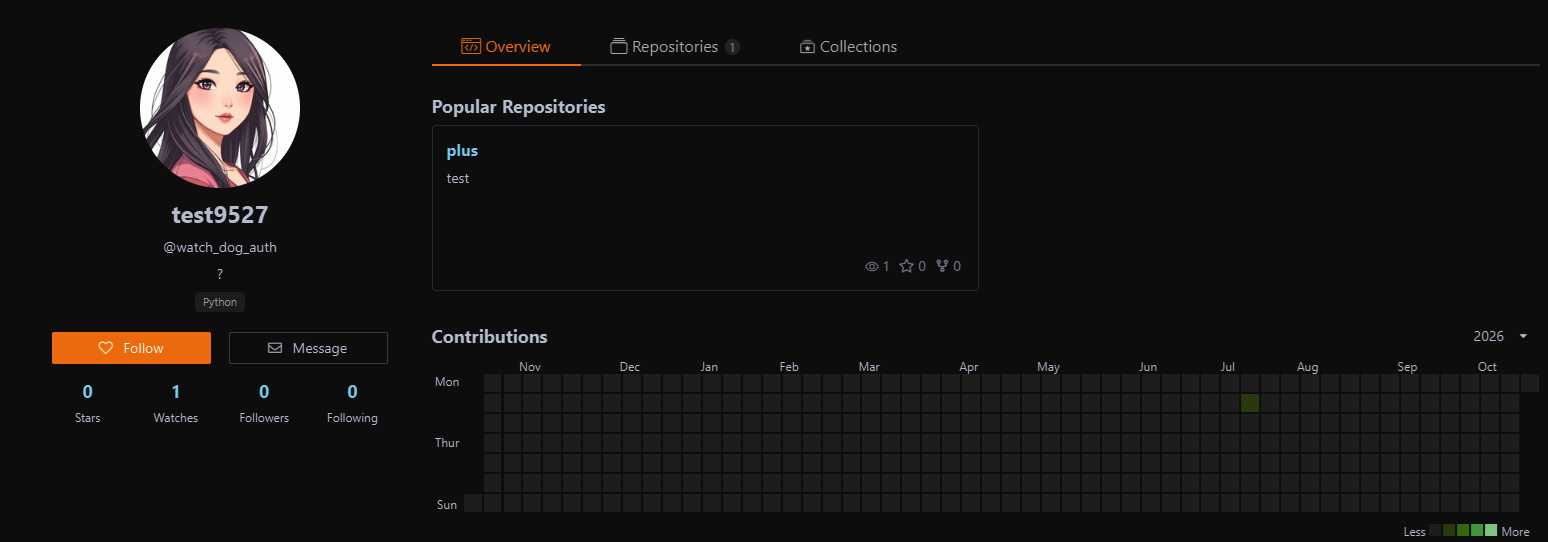
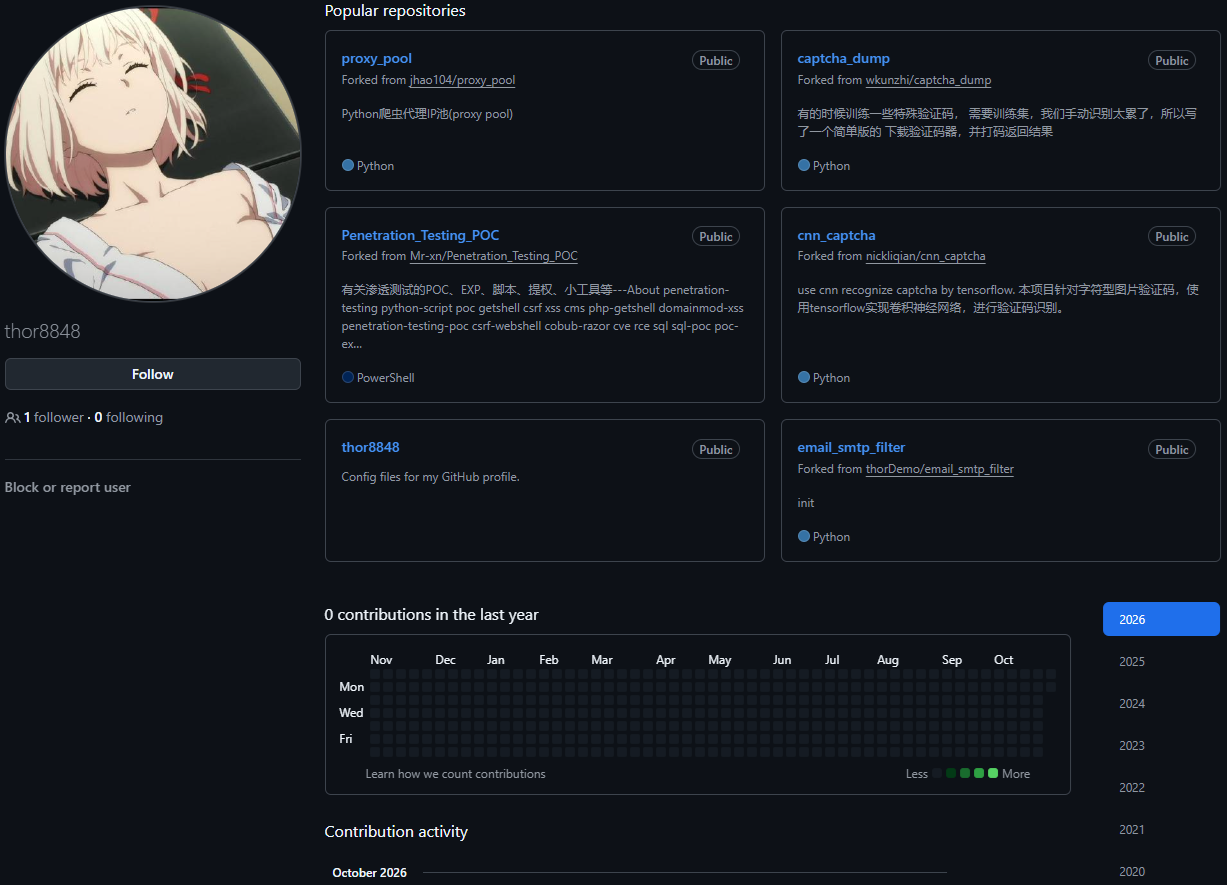
Attribution is weak. ExaTrack assesses the author as probably a Chinese pentester, possibly running red-team engagements, based on Chinese cloud infrastructure, Gitee throwaway accounts (test9527, thor8848, hpgoc2-deploy with email domain hpgoc2.local), a linked 2020 GitHub account tied to pentesting, and a commit message referencing 'ADR 0018'. Commit metadata can be set arbitrarily, so no actor or nation-state is asserted here. No victims, sectors, CVEs or in-the-wild exploitation details are given. BeaconBeagle returned no config matches for top-sec.oss-cn-beijing.aliyuncs.com at the time of research.
MITRE ATT&CK techniques by tactic:
Command and Control
T1008 Fallback Channels; T1071.001 Application Layer Protocol: Web Protocols; T1102.001 Web Service: Dead Drop Resolver
Discovery
T1033 System Owner/User Discovery; T1057 Process Discovery; T1082 System Information Discovery; T1124 System Time Discovery; T1518.001 Software Discovery: Security Software Discovery
Defense Evasion
T1036 Masquerading; T1036.005 Masquerading: Match Legitimate Resource Name or Location; T1564.001 Hide Artifacts: Hidden Files and Directories
Execution
T1059 Command and Scripting Interpreter
Resource Development
Remediation
Immediate actions
- Hunt Linux VMs on Alibaba, Tencent and Huawei cloud for /dev/shm/.ov2/, .helper.lock, .epcache and .cfg files and for OSS_V2_* environment variables
- Verify that processes named AliyunSysAssist, YunJingSysAssist, UniAgentSys or kworker/0:2H are the genuine vendor binaries (check path, package ownership and hash); a real kworker has no userland executable path
- Alert on server egress to top-sec.oss-cn-beijing.aliyuncs.com, assist-logs.oss-accelerate.aliyuncs.com and gitee.com/watch_dog_auth from workloads that have no business need for them
- Search for AF_UNIX sockets named hpgoc2.oss.v2.core and shared-memory objects named ov2-out
- Block or monitor HTTPS requests with User-Agent AliyunSysAssist/1.0 that do not originate from the genuine agent
Workarounds
- Where the initial access vector is unknown, rebuild suspected VMs from known-good images and rotate credentials reachable from them
Longer-term hardening
- Restrict egress from cloud VMs to approved OSS buckets and endpoints (bucket-level allow-listing) rather than the whole aliyuncs.com domain
- Alert on unexpected system or hardware clock changes (hwclock -w / --systohc) on servers
- Baseline legitimate cloud-agent install paths and hashes and alert on look-alike agent names or directories
- Deploy Linux EDR with process-name versus executable-path consistency checks
Affected and fixed versions
- Alibaba Cloud — Linux ECS virtual machines (impersonated aliyun-assist / Aegis agents)
Vulnerable versions: Not applicable - implant, not a product vulnerability - Tencent Cloud — Linux CVM virtual machines (impersonated YunJing / tat_agent)
Vulnerable versions: Not applicable - implant, not a product vulnerability - Huawei Cloud — Linux ECS virtual machines (impersonated uniagent / telescope)
Vulnerable versions: Not applicable - implant, not a product vulnerability
Timeline
- Gitee project watch_dog_auth/plus created: 'Initial commit' by throwaway identity test9527 at 10:07 UTC, followed the same day by a 'init' commit by thor8848 (the project hosts the implant's fallback C2 config).
- Commit by hpgoc2-deploy (deploy@hpgoc2.local) 'oss endpoint: top-sec -> assist-logs (ADR 0018 migration rescue)' moves C2 from the top-sec OSS bucket to locked-ioc-4.
- ExaTrack author 'Heurs' dates the YARA rule 'vmcloudoor' (Linux x64 ELF under 3 MB).
- ExaTrack publishes 'Vmcloudoor' analysis of the helper module and a later build sharing about 88% of its code; first public disclosure.
- BeaconBeagle config search for domain locked-ioc-6 returns zero matches during this research.
- GBHackers reports the ExaTrack findings: Linux VMs on Alibaba, Tencent and Huawei cloud targeted by an agent-masquerading backdoor with OSS/Gitee dead-drop C2.
Sources cited
- ExaTrack - Vmcloudoor exatrack.com · Research · 2026-11-19
- ExaTrack Exalyze sample - Vmcloudoor helper (first build) exalyze.io · Research · 2026-11-19
- ExaTrack Exalyze sample - Vmcloudoor later build exalyze.io · Research · 2026-11-19
- ExaTrack - Gitee project screenshot exatrack.com · Research · 2026-11-19
- ExaTrack - thor8848 GitHub account screenshot exatrack.com · Research · 2026-11-19
- Gitee fallback config project watch_dog_auth/plus gitee.com · Code repository · 2026-07-21
- GBHackers - Hackers Could Control Linux Cloud Servers Using Vmcloudoor Backdoor Disguised as Trusted Agents gbhackers.com · News · 2026-11-23
Previous and next in malware
- Competing ClickFix Kits: 13 ClickFix Injections and 7 Malicious Loaders on a Compromised WordPress Site (LOM, EtherHiding, macOS Lure) Previous report
- MoldyRoost Malvertising Campaign Delivers Coruna, SilkPath, DarkSword and GhostWave iOS Exploit Kits to Steal Passwords, Messages, and Crypto Wallets Next report
Drafted by the Threadlinqs research pipeline from 7 sources; published ; last updated —.